
If you have mature trees in Banks, pruning is usually the best thing you can do for them. A certified arborist takes out dead, weak, or crowded limbs, and the tree can then put its energy into growing strong. That’s why, for most homeowners searching for tree service Banks OR, pruning and a basic health check come long before anyone mentions removal.
Banks is where the farmland of the Tualatin Valley runs up against the Coast Range foothills. Living on that rural edge means tall Douglas firs, old Oregon white oaks, and plenty of backyard orchards. It also means wind, long wet winters, and wildfire risk. Caring for your trees well protects your own property and the canopy your whole neighborhood enjoys.
Quick Cuts
- Tree pruning and a professional health evaluation solve most tree problems without removal.
- Banks trees face local stresses like saturated winter soils, east wind events, ice, and summer drought.
- Dead limbs, fungal growth, cracks, and sudden leaning deserve an arborist’s attention soon.
- Removal makes sense only when a tree poses real risk or cannot recover.
What Tree Care in Banks, Oregon Really Involves
The kind of tree care Banks Oregon homeowners can rely on begins with a diagnosis. The chainsaw comes later, if at all. An arborist (someone trained in tree biology and care) starts by looking at the whole picture: roots, trunk, canopy, and whatever is growing or built nearby.
What happens next depends on what they find. You might need tree trimming for clearance, structural pruning to strengthen the tree, treatment for pests or disease, or a formal tree risk assessment. That last one is a structured inspection that weighs how likely a tree or limb is to fail and how much damage it would do if it did.
Service | Purpose | When It’s Needed |
Tree trimming and pruning | Remove dead, weak, or crowded limbs and improve structure | Every 3 to 5 years for mature trees, sooner for fruit trees |
Tree health evaluation | Diagnose disease, pests, decay, and root problems | Thinning canopy, fungal growth, or unexplained decline |
Tree removal | Eliminate a hazard that cannot be corrected | Severe decay, major structural failure, or a dead tree near targets |
Stump grinding | Grind the stump below grade after removal | After removal, to prevent pests, regrowth, and trip hazards |
These services build on each other. Get the diagnosis right and you know where to cut. Make the right cuts and you can often avoid a removal down the road.
Local Conditions That Shape Tree Health in Banks
Winters in Washington County keep the ground soaked for months at a time. When roots sit in waterlogged soil, they’re starved of oxygen, and that opens the door to root rot fungi such as Armillaria and Phytophthora. A tree with weakened roots is far more likely to go over in a windstorm.
Ice storms are another problem. The extra weight snaps limbs, and bigleaf maples with tight branch unions are especially vulnerable. Then summer arrives and everything dries out. Drought-stressed Douglas firs become easier targets for bark beetles, and Oregon white oaks start dropping branches.
If your property backs up to the forest edges around Banks and Forest Grove, wildfire fuel is a real concern too. Dead branches, brush piles, and ladder fuels (low limbs that give fire a path up into the crown) all add to the risk once late-summer fire season hits.
Here are the species we run into most often on local properties:
- Douglas fir: prone to root rot and windthrow in saturated soil
- Oregon white oak: long-lived and ecologically valuable, sensitive to root disturbance
- Bigleaf maple: fast-growing but prone to limb failure and internal decay
- Apple, pear, and cherry orchards: need regular pruning for fruit and airflow
All of this is why the warning signs below are worth taking seriously around here.
Signs Your Trees Need an Arborist
Some trouble develops over years. Storm damaged trees, on the other hand, can go from fine to dangerous overnight. Keep an eye out for these signs a tree is dying or becoming unsafe:
- Dead or leafless limbs, especially in the upper canopy
- New or worsening lean, or soil heaving near the base
- Mushrooms, conks, or fungal growth on the trunk or roots
- Deep cracks, splits, or cavities in the trunk
- A sparse or thinning canopy compared with past years
- Branches touching roofs, gutters, or power lines
A lot of these are the same signs it’s time to trim, and a straightforward pruning visit takes care of them. A tree that’s completely dead and standing near your house or driveway is another story. Getting dead tree removal done promptly keeps it from failing when you least expect it. Not sure which situation you’re in? An arborist can sort that out for you.
Why Stewardship Beats Quick Removal
It took decades for your mature tree to reach its size, and you can’t replace that in a hurry. Big trees shade houses, slow down stormwater, clean the air, and hold soil in place. A young tree planted in its spot may take many years to catch up.
Older oaks and firs also support birds, pollinators, and insects in ways new plantings simply can’t. Lose them one at a time and, before long, the valley has lost a meaningful share of its canopy. Looking at that bigger picture is part of how tree care preserves the environment over time.
That said, sometimes taking a tree down really is the responsible call. If it comes to that, think about the stump as well. Putting off stump grinding can lead to pests, spreading fungus, and sprouts you don’t want.
Tree Care for Rural Landowners and Properties
Owning acreage changes the conversation. Rural clients often want help reducing fuel around homes and barns, clearing ground for pasture or farm use, or getting overgrown fence lines back under control.
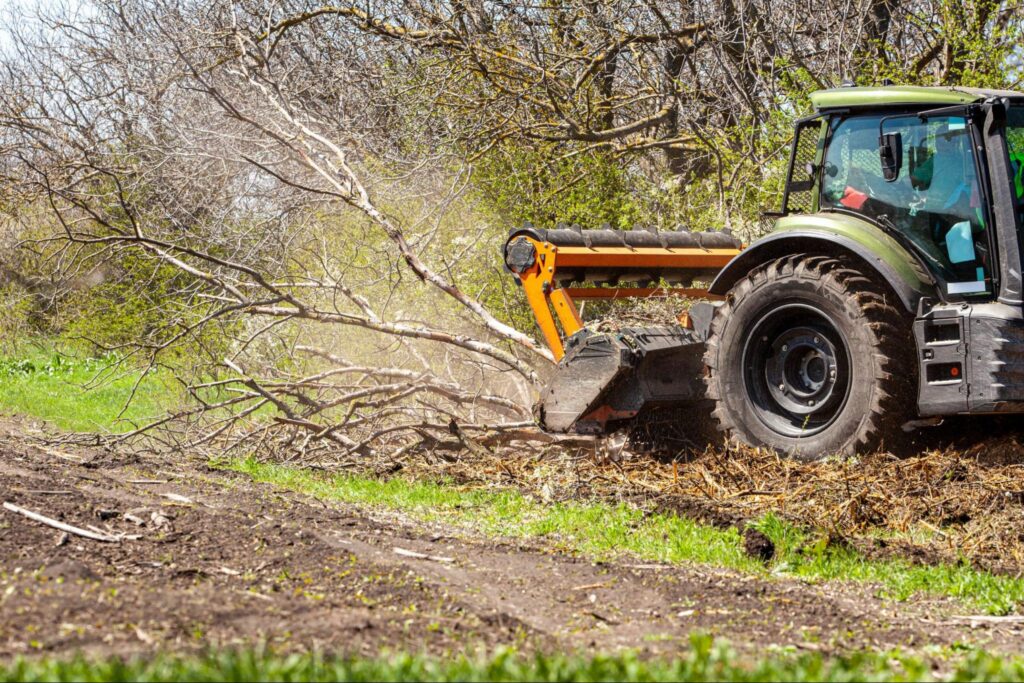
A forestry mulching company can turn brush and small trees into mulch that stays right on the property and protects the soil. We also partner with HOAs and developers who want to clear land responsibly while keeping the healthy trees in place.
Talk With a Local Arborist
Type “tree service near me” into a search bar and you’ll get no shortage of results. Local experience is what sets them apart. An arborist Banks OR residents trust understands how valley soils, coastal winds, and regional pests actually behave. Marble Tree Service’s certified arborists work throughout Banks, Forest Grove, and Washington County all year long.
Schedule a Tree Health Evaluation with a Marble Tree Service Arborist
Your trees are long-term assets, and making the right call starts with an honest look at how healthy they are. For thoughtful tree service Banks OR property owners can count on, schedule a tree health evaluation with a Marble Tree Service arborist today. Call us at (503) 867-1634 today and we’ll walk you through what we see, why it matters, and every option you have before a single cut is made.
Frequently Asked Questions
How much does tree service cost in Banks, OR?
Pricing depends on the size of the tree, where it sits, how easy it is to reach, and what work it needs, so a site visit is the best way to get an accurate number. People often ask how much does tree removal cost, and the honest answer is that it varies a lot. Taking out a small ornamental tree is nothing like removing a 100-foot Douglas fir next to a house. Pruning is usually less expensive than removal, and it can push removal off for years or make it unnecessary.
When is the best time to prune trees in Banks, Oregon?
For most species, the answer to when to trim trees is late winter, while they’re dormant, because the cuts close up nicely once spring growth kicks in. Oaks do best when pruned during dry months, which helps limit the spread of disease, while fruit trees respond well to dormant-season pruning in late winter.
“Jason was professional, courteous, and did a great job not only trimming but also cleaning up. The price was right, and he’s local. My wife and I are lifelong residents of the Forest Grove area and we pride ourselves in doing local business. Marble Tree Service is a great example of why we do so. Thanks for everything, Jason. If you’re concerned about which choice to make, look no further. This business came HIGHLY recommended by my neighbors and will be mentioned as such to all our family, friends, and associates.”
– J.S.